FootGolf vs. Golf: What's Actually Different?
Published April 5, 2026 · Updated July 18, 2026
FootGolf borrows so much from golf (the course, the scorecard, the etiquette) that it's easy to assume it's basically the same game with a bigger ball. The differences, though, change the entire feel of a round.
Equipment
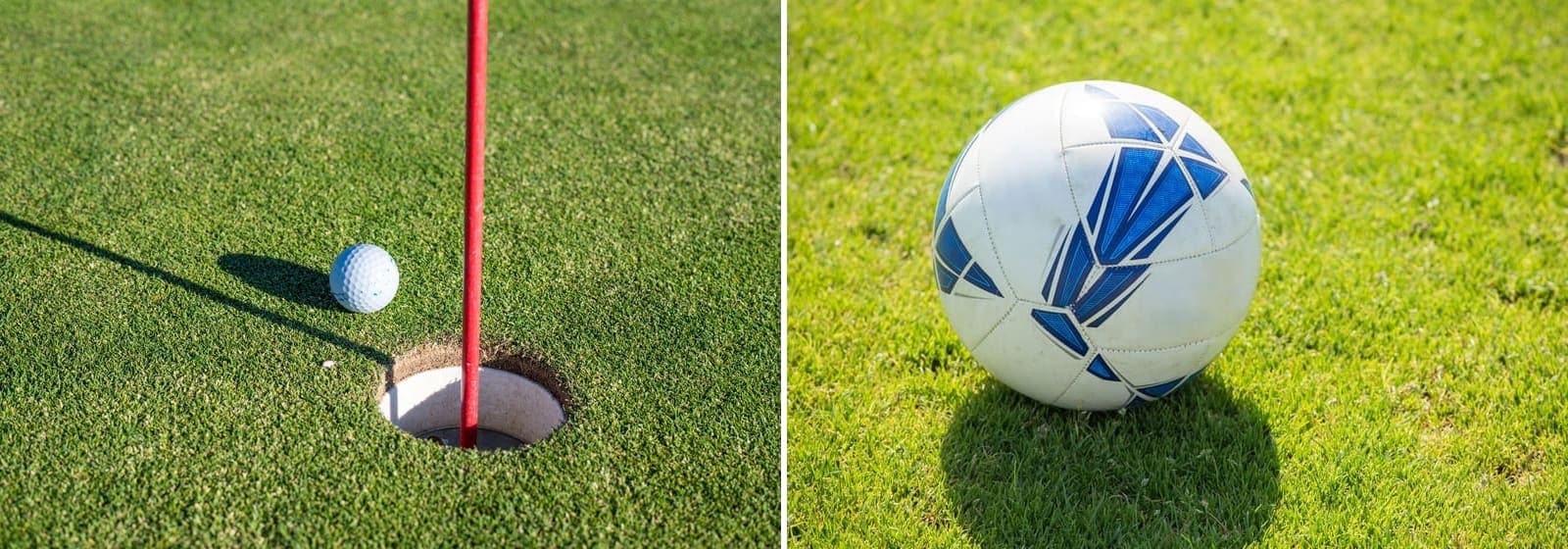
Golf requires a full bag of clubs matched to distance and lie. FootGolf requires one thing: an approved size 5 soccer ball. That's the single biggest reason FootGolf has a lower cost and learning curve to get started.
The hole
A golf hole is 4.25 inches across. A FootGolf hole is 50 to 52 cm (about 20 inches) wide, big enough to accept a rolling soccer ball but still demanding real accuracy from 100+ yards out.
Scoring
Identical. Both sports use par, birdie, eagle, and bogey terminology, and both score a round as total strokes (or kicks) relative to par across 18 holes.
Skill demands
Golf tests swing mechanics and club selection; FootGolf tests kicking technique, strike quality, and touch around the green with your feet instead of a putter. Distance control from long range is the closest shared skill between the two.
Pace of play
FootGolf rounds move noticeably faster: there's no club selection, no practice swings, and less time reading complex lies, which is part of why courses can often run FootGolf and golf side by side.
Want the full rulebook? Head to our complete how-to-play guide.